
PFC Marx Tittjung and Pvt. Melvin Kretzger may not have known each other before they were shipped to the Italian front in 1944. But they died within months of each other on a battlefield in Florence, their short lives marked by a pair of simple white crosses.
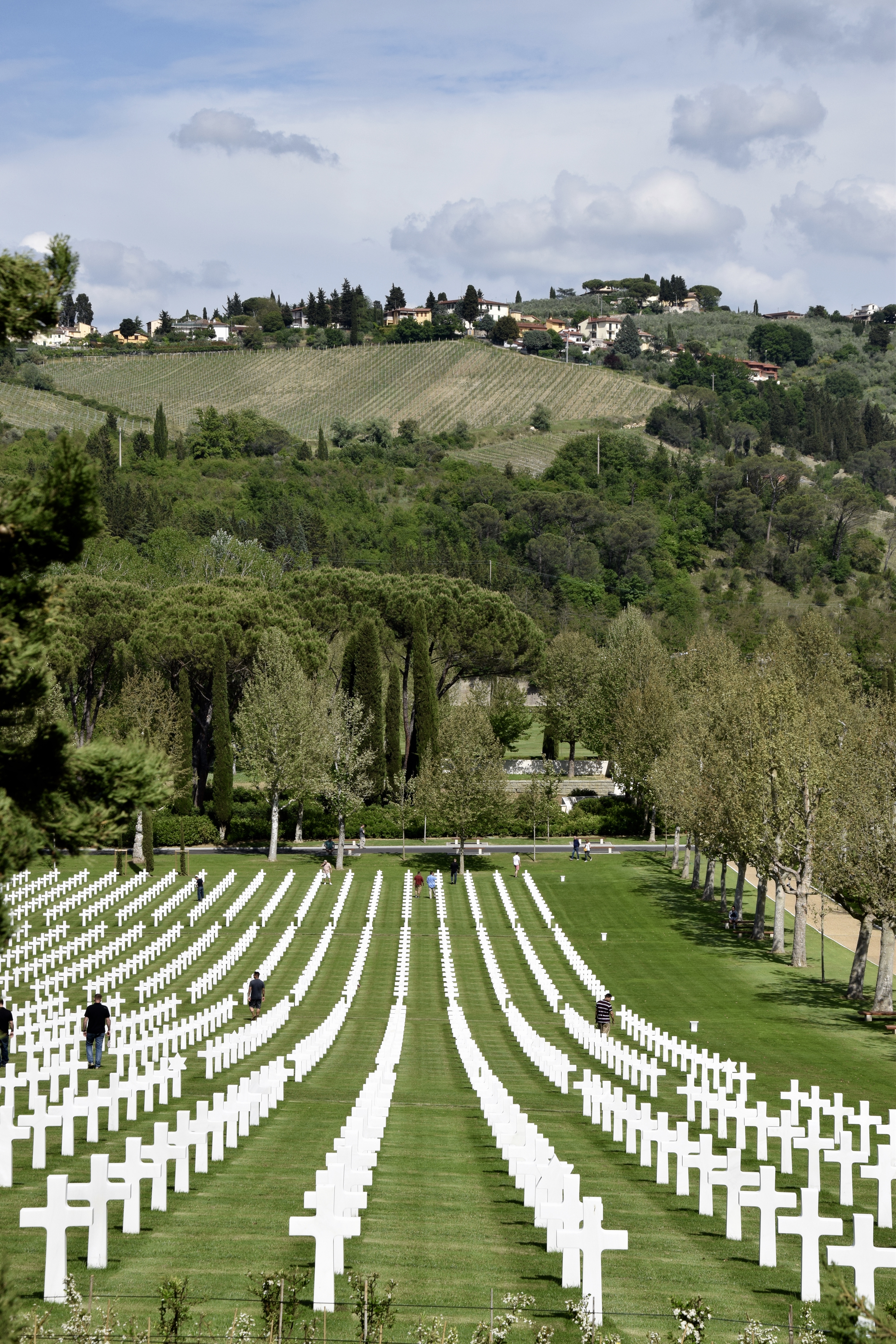
Tittjung and Kretzger are two of the 4,400 U.S. soldiers interred in the Florence American Cemetery, the graves of which blanket the hills of Tuscany, a gentle cascade of lives sacrificed for others, spilling over the grass. At the top of the 70-acre site is a memorial with two open courts sporting “Tablets of the Missing.” These inscriptions include those MIA who have been recovered and identified. The courts form an atrium that includes a chapel as well as a mosaic of maps showing the battles of the American troops in the Tuscany region.
Italian-born Paolo Barbaro, a linguistics professor and our tour director here on this May visit, considers the cemetery among the most important sites for people to visit, especially students. Paolo and I are old friends—this is our third trip together with students. As our bus approaches the cemetery, Paolo talks about the history of the cemetery and how important the American troops were in helping Italians secure a victory over the Germans in the closing years of World War II. His grandparents and uncles fought in battles not far from where so many died.
It is hard to imagine a war ever occurred here. This is the Italian wine country, a place more often associated with vineyards and olives than the scars of war long hidden by grass and trees and vines, a place where homes and villages have been rebuilt, new lives forged over the fiece battles of the past.
But the graves remember.
Our visit to the Florence American Cemetery included two veterans. Stephanie Harmon, Tecumseh city councilmember and an Air Force veteran, said she thought the sight of the cemetery was “beautiful and breathtaking.
“Walking among the tombstones made me cry—these places always make me cry—for the loss of soldiers and the sadness that this still goes on in our world today,” Harmon said. “I saw the mosaics of the campaigns of the Allied forces against the Nazi and Japanese forces—the waves of engagement—that many forget about.”
Harmon said when she was stationed on Guam, she had the opportunity to visit many of the places where the Japanese and U.S. forces engaged in combat and like the Florence Cemetery, “these are just beautiful tributes to the soldiers and sailors lost.”
U.S. Army Spc. Ronda Tuberville, who hails from the Detroit area, also visited the cemetery. She is retired now, but her active duty assignment as a specialist in the armament corps gave her many opportunities to see the kinds of sacrifices soldiers make in battle.
“It was emotional hearing about what had happened and how the cemetery came to be,” Tuberville said. “The grounds were beautiful and really added to the tranquility of the place. I thought the monuments really were breath-taking. Visiting the cemetery really meant so much to me.”
Paolo believes it is important to let Americans know the sacrifice of their sons and daughters won’t be forgotten and he wants students to know what a vital role American troops played in the victory of the Allied forces in freeing Italy from the Nazi regime.
“We shall never forget those who gave their lives for our freedom,” Paolo said.
As we gather next week at Brookside Cemetery and pay tribute to all of those who have made that ultimate sacrifice, perhaps we might find a more permanent way to honor our dead by giving peace a real chance.
 SQUIBS